Great Prices
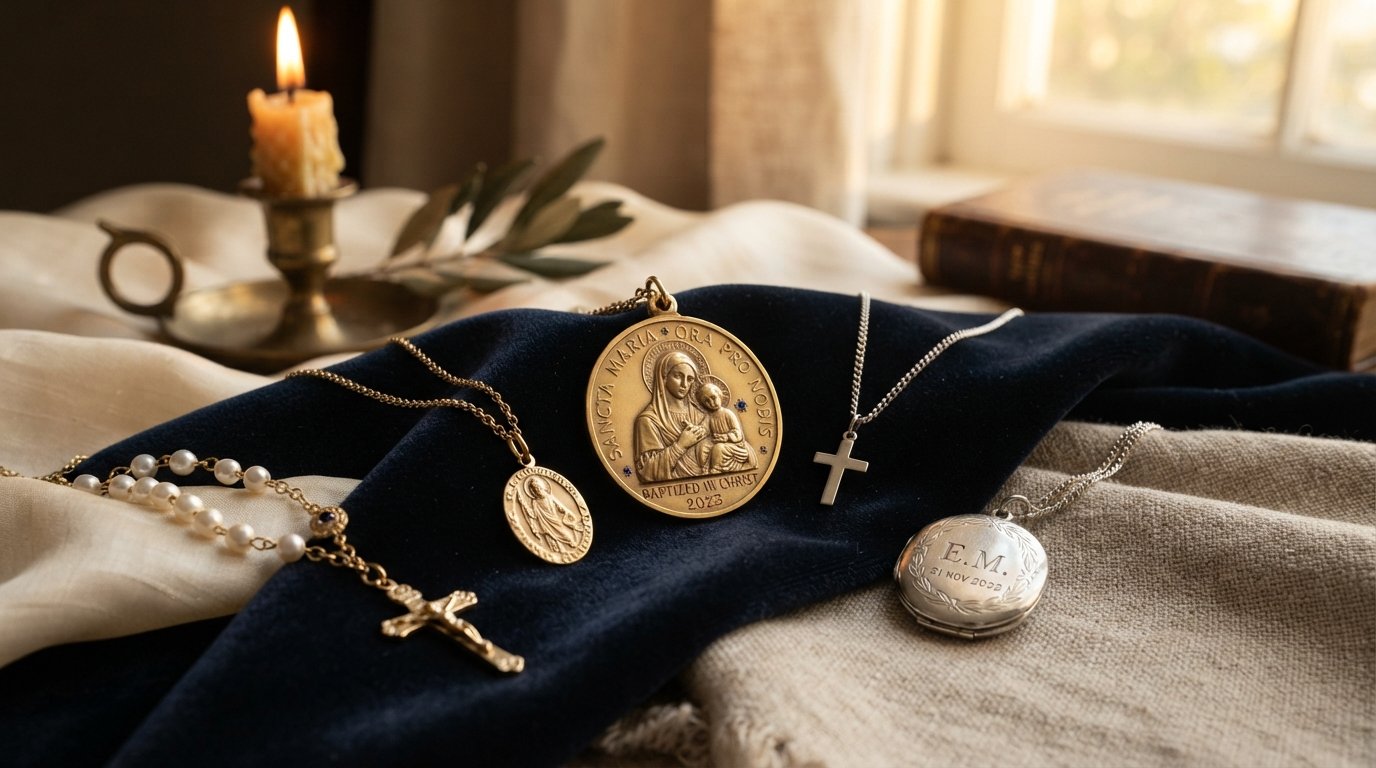
Finding a quality christening piece without blowing the budget comes down to a few precise choices: the metal, the weight, the level of detail on the design, and the length of the engraving. This great prices selection brings together pieces designed to stay affordable without sacrificing sturdiness or the clarity of the design.
925 silver or 9-carat gold: what really drives the cost difference
Solid 925 silver (92.5% pure silver) remains the most common entry point for a first medal or first ID bracelet: it holds up well over time for a given metal weight, at a noticeably lower cost than gold. 9-carat gold (375/1000) is the lightest option on the budget among gold pieces, since it contains less precious metal than 18-carat gold (750/1000). A 9-carat gold piece keeps the look and color of classic gold, with scratch resistance suitable for everyday wear on a child.
Weight in grams, the main price driver
For the same design, a 14 mm medal will weigh noticeably less than a 20 mm medal: the amount of metal used directly drives the final price, more so than the chosen design. A matte sandblasted finish generally requires fewer finishing passes than a mirror-polished finish, which also explains some price differences between two medals of the same size.
Which medal diameter for a tight budget
Diameter is chosen first based on the child’s age, and a smaller diameter is mechanically cheaper:
- 14 to 15 mm: newborns and babies up to one year old, discreet on a thin chain
- 16 to 18 mm: children aged 1 to 6, a good balance between readability and weight
- 20 to 22 mm: worn later or passed on into adulthood, more detailed design but higher weight and price
The chain follows the same logic of restraint: a 40 cm length suits an infant, 42 to 45 cm suits a growing child, without needing to buy a new piece within the first few years.
A simple design weighs less on the price
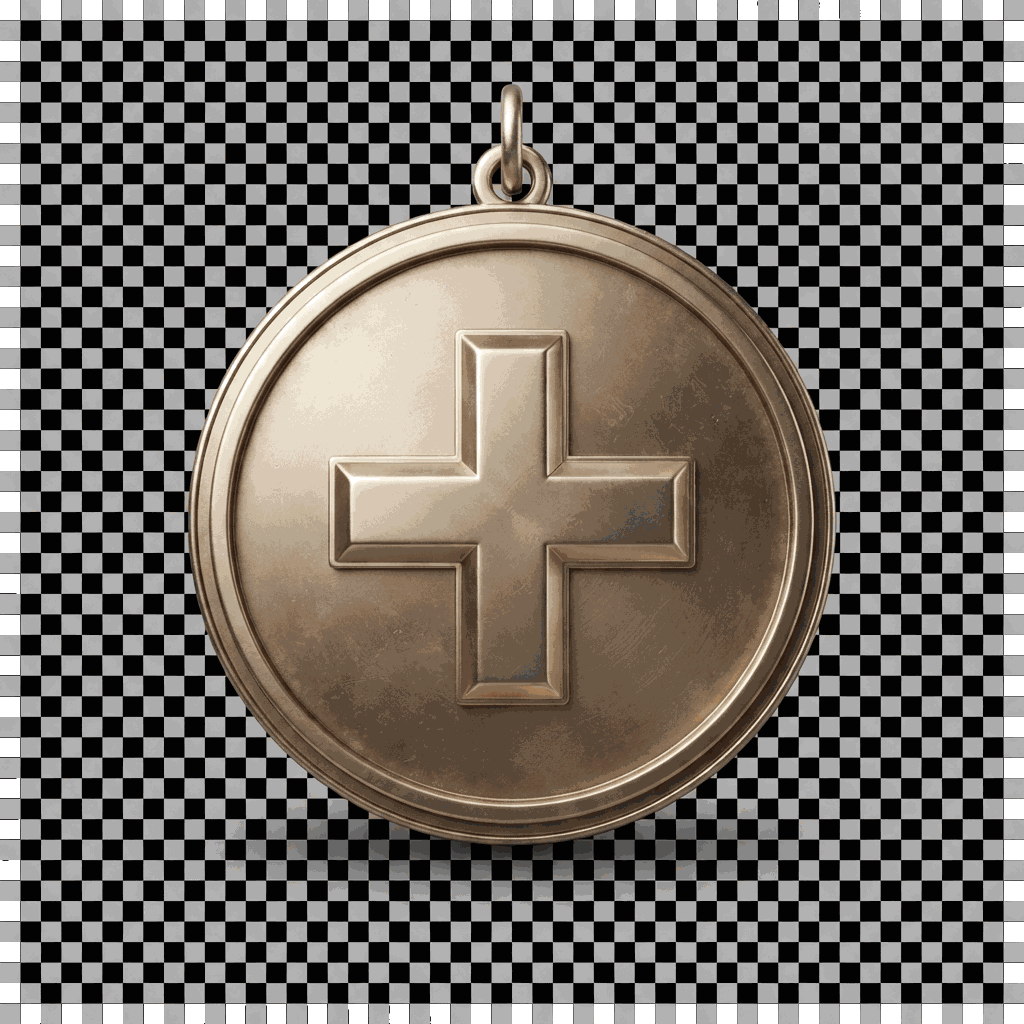
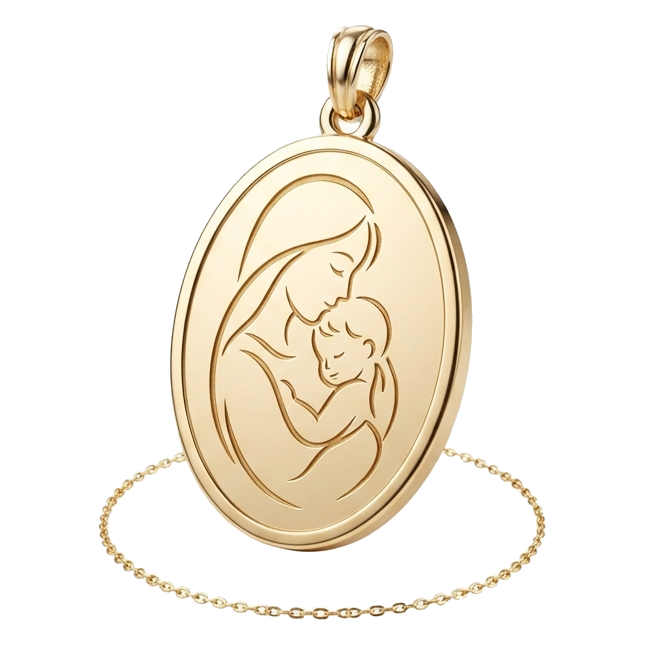
A low-relief design, such as a plain cross or a chrism stripped of secondary details, uses less metal than a highly detailed Virgin and Child or a Miraculous Medal with its rays and storied reverse side. The Miraculous Medal itself takes its name from the apparition reported by Catherine Labouré in 1830 — a useful reference for choosing the design knowingly, not a pricing argument in itself. A patron saint with a simple outline (Saint Christopher on a flat medallion, for example) is often a lighter option than a scene in high relief.
Limiting the engraving to limit the cost
A christening medal is traditionally engraved on the back, on a space just a few millimeters wide: a short first name and a date in day/month/year format fit without difficulty, whereas a long text forces the character size down to the point of hurting readability. Sticking to just the first name and date, without adding a phrase, keeps the piece clean and quick to engrave.
Choosing 925 silver rather than gold, a diameter between 14 and 18 mm, and a simply relief design makes it possible to put together a christening piece that is coherent, sturdy, and suited to a measured budget, without settling for something flimsy or poorly finished.
Showing all 11 results
-

Aztec token
£37.99 -

Curb chain – 18 carats
£545.99🛒 This product has multiple variants. The options may be chosen on the product page -

Curb chain – 9 carats
£214.99🛒 This product has multiple variants. The options may be chosen on the product page -

Diamond solitaire necklace – 18 carats
£761.99 -

Laurette
£48.99 -

Miraculous medal – 9 carats
£234.99🛒 This product has multiple variants. The options may be chosen on the product page -

Miraculous medal for engraving – 18 carats
£520.99🛒 This product has multiple variants. The options may be chosen on the product page -

Miraculous medal for engraving – 9 carats
£254.99🛒 This product has multiple variants. The options may be chosen on the product page -

Openwork silver cross pendant
£99.99 -

Openwork silver flying dove christening medal
£112.99 -

Round cable chain – 18 carats
£351.99🛒 This product has multiple variants. The options may be chosen on the product page
Finding a quality christening piece without blowing the budget comes down to a few precise choices: the metal, the weight, the level of detail on the design, and the length of the engraving. This great prices selection brings together pieces designed to stay affordable without sacrificing sturdiness or the clarity of the design.
925 silver or 9-carat gold: what really drives the cost difference
Solid 925 silver (92.5% pure silver) remains the most common entry point for a first medal or first ID bracelet: it holds up well over time for a given metal weight, at a noticeably lower cost than gold. 9-carat gold (375/1000) is the lightest option on the budget among gold pieces, since it contains less precious metal than 18-carat gold (750/1000). A 9-carat gold piece keeps the look and color of classic gold, with scratch resistance suitable for everyday wear on a child.
Weight in grams, the main price driver
For the same design, a 14 mm medal will weigh noticeably less than a 20 mm medal: the amount of metal used directly drives the final price, more so than the chosen design. A matte sandblasted finish generally requires fewer finishing passes than a mirror-polished finish, which also explains some price differences between two medals of the same size.
Which medal diameter for a tight budget
Diameter is chosen first based on the child’s age, and a smaller diameter is mechanically cheaper:
- 14 to 15 mm: newborns and babies up to one year old, discreet on a thin chain
- 16 to 18 mm: children aged 1 to 6, a good balance between readability and weight
- 20 to 22 mm: worn later or passed on into adulthood, more detailed design but higher weight and price
The chain follows the same logic of restraint: a 40 cm length suits an infant, 42 to 45 cm suits a growing child, without needing to buy a new piece within the first few years.
A simple design weighs less on the price
A low-relief design, such as a plain cross or a chrism stripped of secondary details, uses less metal than a highly detailed Virgin and Child or a Miraculous Medal with its rays and storied reverse side. The Miraculous Medal itself takes its name from the apparition reported by Catherine Labouré in 1830 — a useful reference for choosing the design knowingly, not a pricing argument in itself. A patron saint with a simple outline (Saint Christopher on a flat medallion, for example) is often a lighter option than a scene in high relief.
Limiting the engraving to limit the cost
A christening medal is traditionally engraved on the back, on a space just a few millimeters wide: a short first name and a date in day/month/year format fit without difficulty, whereas a long text forces the character size down to the point of hurting readability. Sticking to just the first name and date, without adding a phrase, keeps the piece clean and quick to engrave.
Choosing 925 silver rather than gold, a diameter between 14 and 18 mm, and a simply relief design makes it possible to put together a christening piece that is coherent, sturdy, and suited to a measured budget, without settling for something flimsy or poorly finished.
