
Gold Bracelet
Showing 1–36 of 40 results
-

Alma gold-plated bangle bracelet
-

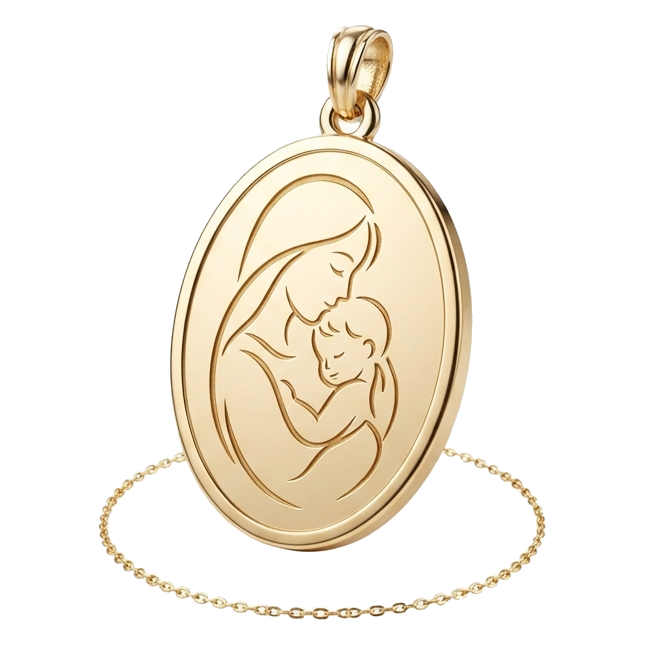
Botticelli Madonna gold medal bracelet – 18 carats
-

Botticelli’s Madonna gold medal bracelet – 9 carats
-

Classic gold bangle – 18 carats
-

Constance open gold-plated bangle bracelet
-

Customizable gold-plated Josephine bangle
-

Diamond medal bracelet – 18 carats
-

Double-row spur bracelet
-

Dove bracelet on blue cord – 18 carats
-

Dove bracelet on pink cord – 18 carats
-

Family yellow gold bracelet – 18 carats
-

Garance gold-plated bangle bracelet
-

Heritage gold-plated bangle
-

Heritage silver bangle
-

Heritage yellow gold bangle – 18 carats
-

Honorine bracelet – 9 carats
-

Jubilee decade bracelet
-

Mini circle – 18 carats
-

Mini openwork dove – 18 carats
-

Mini openwork Roman cross – 18 carats
-

Mini star – 18 carats
-

Mini Stella – 18 carats
-

Miraculous gold bracelet – 18 carats
-

Miraculous medal and cross decade bracelet – 18 carats
-

Mother of pearl chain bracelet on round curb chain – 18 carats
-

Mother of pearl cross bracelet
-

Mother of pearl Roman cross bracelet on round curb chain – 18 carats
-

Our Lady of Wisdom portrait medal bracelet – 18 carats
-

Oval jaseron chain bracelet – 18 carats
-

Radiant Virgin and Child gold medal bracelet – 18 carats
-

Radiant Virgin and Child gold medal bracelet – 9 carats
-

Radiant Virgin and Child medal bracelet – 18 carats
-

Roman cross bracelet – 18 carats
-

Silver and blue bead decade bracelet
-

Silver and pale pink pearl decade bracelet
-

Silver and white pearl decade bracelet
Gold bracelet: which style matches your needs
A gold bracelet is chosen first for its chain style, not its price. A rigid 18 carat gold (750/1000) bangle sits on the wrist without shifting against the skin; a curb or rope chain bracelet follows the movement of the wrist and lends itself to engraving; a charm bracelet builds up trinkets over the years. These three families aren’t worn the same way and don’t suit the same wrist shapes.
18 carat gold remains the reference standard in fine jewelry: 750 parts pure gold per 1000, alloyed with silver or copper for strength. 9 carat gold (375/1000) contains less precious metal and costs less, but scratches faster with daily contact against a watch or watch strap.
Fine and chain-link bracelets: everyday wear
The bangle, a flat or slightly curved ring, goes on and is forgotten: it’s the most commonly worn everyday style because it doesn’t catch on anything. The curb chain bracelet, made of flattened links, offers an engravable plate on top of the wrist — a first name, date or initials fit in a few characters, with space limited by the width of the link. Marine mesh, denser, resists pulling better than a fine rope chain.
To put together an outfit, a fine yellow gold bracelet pairs with a necklace in the same chain style without overloading the wrist; those who prefer a cooler look turn to a solid 925 silver bracelet, less expensive for the same volume.
Charm bracelets and cuffs: a statement wrist
The charm bracelet is personalized charm by charm, each one added on a different date. The cuff, meanwhile, covers a good part of the forearm and is worn alone, without stacking: it doesn’t need a second piece of jewelry to stand out on an outfit.
Gold bracelet for children: safety first
For a baby or young child, the clasp matters more than the decoration: a lobster clasp or spring ring clasp that won’t open on its own prevents the piece from being lost. Length should be chosen with room to spare, since a child grows quickly, and an adjustable cord extends the use of a birth bracelet over several years. The children’s bracelet differs from the adult version through its lighter weight, generally under 2 grams for the finest styles, designed not to weigh down a small wrist.
Personalizing a gold bracelet: engraving and material
A curb chain bracelet is engraved on the back of the plate, usually with a short first name or initials followed by a date: the surface available on an 8 to 10 mm link doesn’t allow for more than one legible line. A personalized bracelet can also be built by adding charms or beads, each linked to a name, a birth or a date worth remembering. The choice of material — yellow gold, rose gold, white gold, all available in 18 or 9 carats, or solid silver — affects the final look more than the piece’s durability: rhodium-plated white gold needs periodic re-rhodium plating to keep its cool shine, unlike yellow gold, which doesn’t change appearance.
Choosing the right size for your gold bracelet
Wrist size is measured with a soft tape measure, adding the width of a finger to let blood circulate under the bracelet. Standard guidelines:
- Newborns and babies: 11 to 14 cm, often with an adjustable cord;
- Children aged 3 to 10: 14 to 16 cm;
- Adult women: 16 to 18 cm;
- Adult men: 18 to 20 cm.
A christening bracelet is best chosen in 12-13 cm with an adjustable link: an infant’s wrist grows by several centimeters before the age of one.
Caring for a gold bracelet
A few minutes’ soak in lukewarm water with a drop of mild soap, rinsed and dried with a microfiber cloth, is enough to remove the skin and cosmetic residue that dulls its shine. Pool chlorine and seawater iodine attack the alloy over time: it’s best to remove the bracelet before swimming. Stored alone in a fabric pouch, it avoids the micro-scratches caused by rubbing against other jewelry in the same drawer.
Recognizing 18 carat gold
In France, the official hallmark for 18 carat gold is an eagle’s head, stamped on the clasp or a discreet link. 9 carat gold carries a different hallmark (a scallop shell). This mandatory marking makes it possible to verify the gold content without having to rely solely on the piece’s label.
What gold purity should I choose for a baptism bracelet?
Most christening bracelets come in 9ct, 14ct or 18ct gold. For a baby, 14ct is the practical middle ground: enough alloy to resist scratches, high enough gold content to avoid skin reactions. An 18ct gold baptism bracelet looks warmer and richer but dents more easily. Gold-filled options cost less and suit everyday wear.
How do I pick the right size for a newborn or toddler?
Newborns to 6 months typically need 10-11cm, 6-18 months 11-12cm, and 2-4 years 12-14cm. Measure the wrist with a soft tape and add 1cm of ease. Many expandable gold bracelets for babies use a sliding bead or extension chain, so a single piece adapts from birth through the first few years.
What is the difference between a chain bracelet and a bangle for a christening?
Chain bracelets sit flat and follow the wrist, so they stay comfortable during sleep and feeding. Bangles are rigid, slip over the hand and often carry an engraving on the outer surface. For a baptism gift, a fine curb or figaro chain with a medal charm is the most common choice; bangles suit older children better.
How should I clean and store a gold baptism bracelet?
Soak it in lukewarm water with a drop of mild soap, brush gently with a soft toothbrush around the links and clasp, rinse and dry with a lint-free cloth. Avoid chlorine, perfume and ultrasonic cleaners on pieces set with pearls or enamel. Store each gold christening bracelet in its own pouch to prevent scratching.