
Valentine's Day Selection
Showing 1–36 of 39 results
-

18 karat gold pearl pendant – 18 carats
-

Amethyst “Éclat de Vie” pendant – 18 carats
-

Anna pearl earrings – 9 carats
-

Aquamarine “Éclat de Vie” pendant – 18 carats
-

Beaded chain in silver with yellow gold finish
-

Beaded fleur-de-lis earrings – 18 carats
-

Botticelli Madonna gold medal bracelet – 18 carats
-

Classic gold bangle – 18 carats
-

Customizable gold-plated Josephine bangle
-

Diamond medal bracelet – 18 carats
-

Filigree cross pendant – 18 carats
-

Gold-plated chain bracelet ring
-

Gold-plated intertwined ring
-

Gold-plated rose window pendant
-

Gold-plated sun pendant
-

Heritage yellow gold bangle – 18 carats
-

Honorine bracelet – 9 carats
-

Honorine earrings – 9 carats
-

Honorine necklace – 9 carats
-

Honorine ring – 9 carats
-

Large diamond medal pendant – 18 carats
-

Mini openwork heart – 18 carats
-

Mini openwork Roman cross – 18 carats
-

Mini Stella – 18 carats
-

Miraculous medal and cross decade bracelet – 18 carats
-

Mother of pearl and gold Roman cross pendant – 18 carats
-

Mother of pearl Roman cross bracelet on round curb chain – 18 carats
-

Mother of pearl Roman cross pendant – 18 carats
-

Mother of pearl Virgin and Child radiant christening medal
-

Mother of pearl Virgin Mary
-

Open Miraculous Medal decade ring in gold – 18 carats
-

Oval Virgin mother of pearl christening medal
-

Radiant Virgin and Child gold medal bracelet – 18 carats
-

Roman cross mother of pearl and gold earrings – 18 carats
-

Roman cross mother of pearl earrings – 18 carats
-

Solid round wire bangle – 18 carats
Valentine’s Day jewelry: 18-carat gold, 9-carat gold, or mother-of-pearl
Valentine’s Day remains one of the occasions when jewelry sales rise the most after the end-of-year holidays, and the choice often comes down to three options: 18-carat gold, 9-carat gold, and mother-of-pearl. These three materials differ in feel, in upkeep, and in how well they hold up over time. Before choosing a piece, it’s worth understanding what really sets them apart rather than relying on how they look in a photo.
18-carat gold vs. 9-carat gold: a matter of purity, not quality
The carat rating indicates the proportion of pure gold in the alloy, not a higher or lower level of quality. 18-carat gold is 750/1000 fine, meaning 75% pure gold blended with silver, copper, or palladium depending on the desired tone: yellow, white, or rose. 9-carat gold drops to 375/1000, or 37.5% pure gold. The tone is paler, but the alloy, richer in harder metals, often withstands everyday knocks better on a ring or bracelet worn without interruption.
For a necklace or pendant worn occasionally, 18-carat gold keeps a richer color over time. For a piece worn daily, such as a wedding band or curb chain bracelet, 9-carat gold better withstands micro-scratches without losing its finish.
Mother-of-pearl, a living material that needs careful handling
Mother-of-pearl isn’t a mineral but an organic substance secreted by certain mollusks, oysters, or abalones, built up in successive layers inside their shell. It’s this microscopic layered structure that produces its iridescent shimmer, different from one piece of jewelry to the next since no shell is ever quite the same. Unlike gold, mother-of-pearl is porous: it absorbs perfumes, creams, and chlorine, and can dull if left in prolonged contact with skin after applying cosmetics. A rinse in lukewarm water, with no chemical products, is enough to preserve its shine; wiping it with a soft cloth after each wear prevents the buildup that dulls it over time.
Compare before you buy
- Tone: 18-carat gold keeps a more intense color over time, while 9-carat gold lightens slightly depending on the alloy used.
- Durability: 9-carat gold, being harder, suits pieces worn continuously; 18-carat gold suits jewelry worn occasionally.
- Care: mother-of-pearl should only be cleaned with clear water, never with chemical products or an ultrasonic bath.
- Weight in hand: at equal volume, 18-carat gold is denser and feels more substantial to wear than a mother-of-pearl piece.
Engraving a piece to mark the date
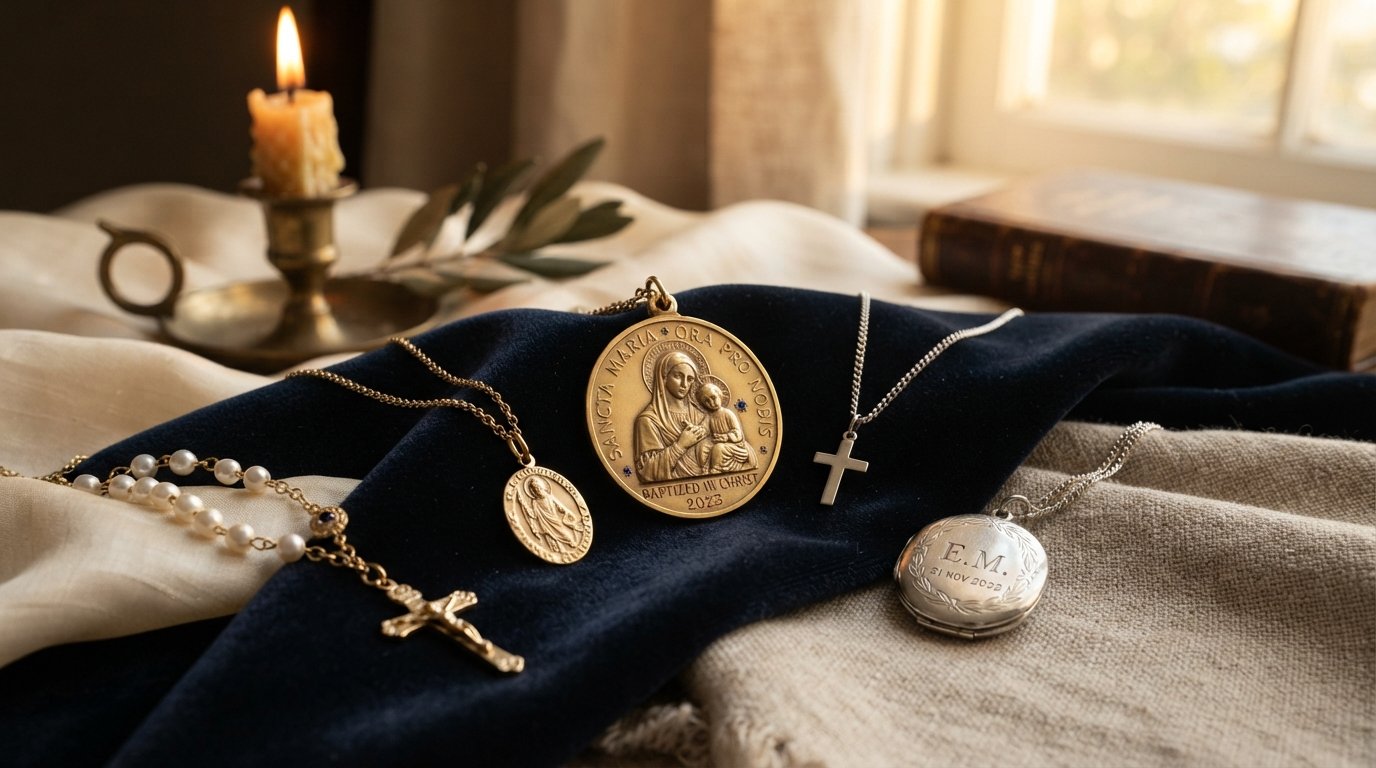
Many pieces of jewelry can be discreetly engraved: initials, a date, a few characters inside a ring band or on the back of a pendant. The available space stays small, often just a few millimeters, so it’s best to choose a short, legible text rather than a full sentence that would become unreadable once engraved. This practice turns a standard piece into a one-of-a-kind object, regardless of the size or model chosen at the outset.
Choosing based on use, not just style
A piece meant to be worn every day, such as a bracelet or wedding band, doesn’t hold up well in porous or overly soft materials: 9-carat gold or solid silver better withstand repeated wear. A piece reserved for special occasions, such as earrings or an evening pendant, can afford to be 18-carat gold or mother-of-pearl, more delicate but less exposed to friction. This logic, more than looks alone, should guide a choice that lasts rather than a purchase regretted three months later. An engagement ring or a signet ring follows the same rule: the more an item stays on the finger permanently, the more the metal needs to absorb knocks without warping.
What makes a christening medal a good Valentine’s Day gift?
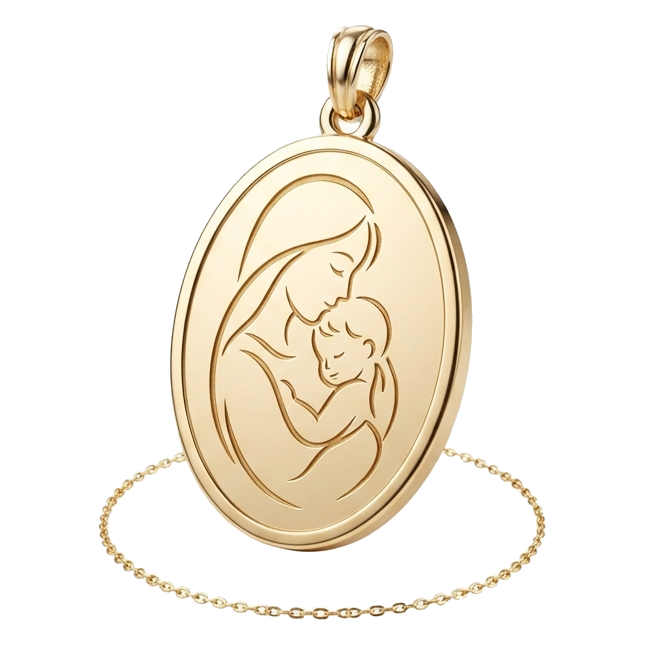
A christening medal works for Valentine’s Day when the recipient already wears religious jewellery or you want a gift with lasting meaning. Choose a Miraculous Medal or a heart-shaped Virgin Mary pendant in 18k gold or sterling silver, 14-16mm, paired with a 40-45cm chain. Many buyers looking for a personalised baptism medal for Valentine’s Day add engraved initials on the reverse.
Which metal should I choose: gold, silver or gold-plated?
Sterling silver (925) costs the least and suits everyday wear, but tarnishes and needs polishing every few months. Solid 18k gold resists tarnish entirely and lasts decades, making it the usual pick for a keepsake. Gold-plated brass looks identical at first but wears through in one to three years. For a hypoallergenic baptism medal for sensitive skin, choose solid gold or rhodium-plated silver.
What size medal is right for a baby versus an adult?
For a newborn or toddler, stay between 11 and 14mm — anything heavier pulls at the neck and catches on clothing. Ages 5-12 suit 15-16mm. Adults wearing a childhood medal again usually move up to 18-20mm on a longer chain. If you are comparing engraved christening medal sizes, remember the reverse needs at least 14mm to fit a name and date legibly.
How do I clean and store the medal so it keeps its shine?
Wipe it after each wear with a dry microfibre cloth to remove skin oils. For deeper cleaning, use lukewarm water with a drop of mild soap, a soft brush around the engraving, then dry fully before storing. Remove it before swimming, showering or applying perfume. Store each piece separately in a pouch — this is how to care for a sterling silver baptism medal and stop it scratching or tarnishing.