Silverware
Showing all 24 results
-

Barrel napkin ring
-

Bead-rim barrel egg cup
-

Beaded christening baby cup
-

Biarritz christening baby cup
-

Crossed ribbons christening baby cup
-

Filet napkin ring
-

Flared France christening baby cup
-

Flared line christening baby cup
-

France egg cup
-

Gadroon egg cup
-

Godron christening baby cup
-

Hammered domed photo frame 10×15
-

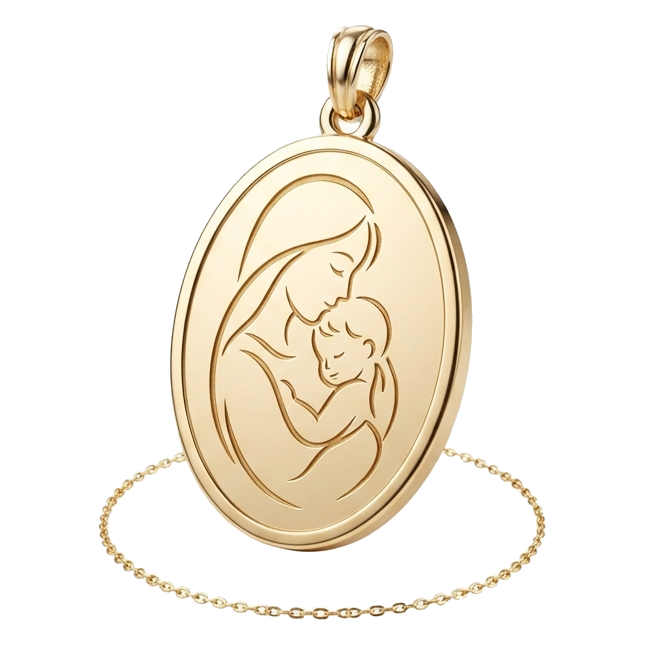
Maternity cradle medal
-

Menton christening baby cup
-

Menton egg cup
-

Multiple border photo frame 10×15
-

Napkin ring – flared gadroons
-

Pearl Egg Cup
-

Plain flared napkin ring
-

Set napkin ring
-

Simple flat photo frame 10×15
-

Simple hollow photo frame 6×9
-

Tambourin baby cup christening
-

Wide flat hammered photo frame 10×15
Sterling Silver Silverware for a Birth or Christening: Cup, Napkin Ring, Cradle Medal
Giving a piece of silverware for a birth or christening comes down to one precise question: which object, in which material, with what engraving. The cup, the napkin ring, the cradle medal, the photo frame and the egg cup are the five families of items traditionally chosen by godparents and grandparents. Each has its own use and a different engraving area, which changes the choice of name or message to be inscribed.
Sterling Silver Cup: Which Model for Which Use
The cup is chosen first for its capacity: common models run around 150 to 200 ml, with a diameter of 6 to 7 cm and a height close to 8 cm. Whether used at the table on special occasions or displayed in a cabinet, it offers a wide surface on the rim or base, enough for a full first name and a christening date on two lines. A model with a handle makes it easier for a growing child to hold; a model without a handle sits more simply on a sideboard.
Napkin Ring and Cradle Medal: Room for Engraving
The napkin ring, with a diameter of around 4 to 5 cm, is most often engraved on the outer face, with initials or a short first name: beyond about ten characters, legibility drops on such a narrow surface. The cradle medal comes in an oval or diamond shape of 4 to 6 cm, hung by a ribbon above the child’s bed; its back, smaller than a classic neck medal, generally holds a first name and a date, rarely more. On the front, the most common motif remains a guardian angel or a Virgin and Child, chosen for its symbol of protection rather than for a strong religious use.
Photo Frame and Egg Cup: Pieces Chosen Without Engraving
The sterling silver photo frame is chosen based on its opening format, the most common matching the standard 10×15 cm print, and on the thickness of its mat. It is generally left unengraved, so as not to overload a piece whose role is to showcase a photograph rather than text. The egg cup, 5 to 6 cm tall, is chosen mainly for its stability once the child starts using it alone, between 12 and 18 months depending on the family; some models pair a small matching napkin ring to form a coherent table set.
Sterling Silver 925 or Silver-Plated: What It Changes for a Gift Meant to Last
Sterling silver, hallmarked 925/1000, contains 92.5% pure silver and 7.5% copper alloy, which gives it its structural strength; an official hallmark certifies this purity on every piece. Silver-plated metal is a brass or nickel silver base covered with a layer of silver just a few microns thick: this layer thins with repeated washing and eventually reveals the base metal, generally after several years of regular use. For an engraved item meant to stay legible for decades, only sterling silver keeps a crisp engraving over time, since the material is identical throughout the full thickness of the piece.
Recognizing the Hallmark
The hallmark is found in a discreet spot: the edge of the base for a cup, the inside of a napkin ring, the back of a medal. Its absence or illegibility should raise questions about the true nature of the item, regardless of how it is described.
Everyday Care
- Clean with a soft cloth and a dedicated silverware product, never with an abrasive
- Store away from humidity, in a closed case rather than left out in the open
- Use an anti-tarnish cloth for pieces kept unused for several months
Silver darkens on contact with sulfur present in the air and in certain foods such as egg or mustard: this tarnishing comes off with regular cleaning and does not indicate any flaw in the piece.
Which Piece for Which Occasion: Birth, Christening, Communion
At birth, the cup and egg cup remain the most common choices because they serve a practical purpose from the very first months. At a christening, the cradle medal and engraved napkin ring more often accompany a choice already settled on the first name and date, the details that will appear on the engraving. For a communion, the photo frame takes over from tableware pieces: the now-older child keeps an object to display rather than to use daily.
Choosing between several pieces within the same family also depends on the space available for the engraving itself: longer text or a full date, day, month and year, requires a larger surface, and so an item of sufficient diameter. On a piece under 4 cm, it is best to stick to initials.
What Is the Difference Between Sterling Silver and 925 Silver?
None: “sterling silver” and “925 silver” refer to the same composition, 92.5% pure silver. The term “sterling” simply specifies that the metal is identical throughout the full thickness of the piece, as opposed to silver-plated metal, which only carries a thin surface layer.
Should a Cradle Medal Be Engraved or Left As Is?
Engraving on the back, with the first name and date, remains the most common practice because it turns a decorative object into a dated keepsake the child rediscovers while growing up. An unengraved medal keeps its front design intact, which matters to some families attached to the original artwork.
What Diameter Should Be Chosen for a Child’s Napkin Ring?
A diameter of 4 to 4.5 cm is enough for a short first name engraved on one line; beyond 6 or 7 letters, a 5 cm model leaves more room and avoids overly cramped text.
What is the difference between sterling silver and silver-plated baptism medals?
Sterling silver (925) is solid metal throughout, so it can be polished for decades without wear-through. Silver-plated pieces have a thin silver layer over brass or nickel, which thins after years of handling. For a sterling silver christening medal meant to be kept and passed on, solid 925 is the safer choice; plated works for short-term gifts.
Which medal size should I choose for a newborn?
For babies, 14 to 16 mm is standard: light enough (roughly 1 to 2 g) to sit flat against the chest without pulling. Choose 18 to 20 mm for a child who will wear it from age five or later, or as a keepsake. Pair a baby medal size for christening gift with a short 36 to 40 cm chain.
How do I keep silverware from tarnishing?
Tarnish comes from sulphur in air, perfume and sweat. Wipe the medal with a soft cotton cloth after wearing, and store it in the anti-tarnish pouch or a sealed bag rather than an open dish. Use a dedicated silver polishing cloth every few months. Avoid dips and toothpaste, which strip engraving detail and matte finishes.
Can these medals be engraved with a name and date?
Most solid silver medals in this range have a flat, unpolished reverse designed for engraving, typically fitting a first name plus a date on two lines. Machine engraving suits thin pieces; hand engraving gives deeper lettering on medals over 16 mm. Order engraving before plating or finishing, since an engraved baptism medal with name and date cannot usually be returned.