
First Communion Gifts for Boys
Showing all 28 results
-

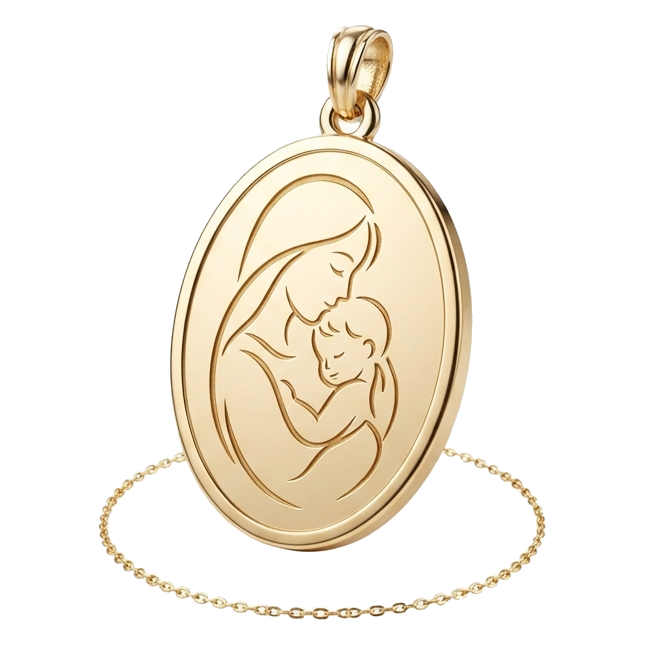
“Sweet Mother” christening medal – 18 carats
-

Botticelli Virgin portrait christening medal – 18 carats
-

Classic cross – 9 carats
-

Classic white gold cross – 9 carats
-

Dove bracelet on blue cord – 18 carats
-

Heritage cross pendant – 18 carats
-

Jerusalem cross pendant – 18 carats
-

Jubilee decade bracelet
-

Large classic silver cross pendant
-

Large solid cross pendant – 18 carats
-

Latin cross pendant – 18 carats
-

Mini openwork dove – 18 carats
-

Miraculous medal – 9 carats
-

Miraculous medal – Mary conceived without sin – 18 carats
-

Miraculous medal – the immaculate conception – 18 carats
-

Miraculous medal – Virgin of the Poor – 18 carats
-

Miraculous medal for engraving – 18 carats
-

Miraculous medal for engraving – 9 carats
-

Miraculous medal silver
-

Mother of pearl cross bracelet
-

Openwork silver flying dove christening medal
-

Radiant Virgin and Child christening medal – 18 carats
-

Round curb chain silver
-

Silver and blue bead decade bracelet
-

Stick cross pendant – 18 carats
-

The Sacrifice cross pendant – 18 carats
-

Tree of Life christening medal – 18 carats
-

Tree of life cross pendant – 18 carats
Which cross should you choose for a boy’s Communion gift?
The cross remains the most popular jewelry gift for a boy’s Communion, whether private or solemn. Three shapes dominate the selection: the Latin cross, understated and timeless, the baton cross, with its slender, elongated arms, and the openwork cross, whose cut-out pattern catches more light. In 18ct gold (750/1000), a small cross typically weighs between 1 and 3 grams depending on its size — a useful benchmark when comparing two models that look similar in photos but differ noticeably once worn.
The choice of shape mainly depends on the child’s age. For a private Communion, around age 7-8, a compact cross of 12 to 15 mm keeps it from swinging around or catching on clothing. For a solemn Communion, at age 11-12, a size of 15 to 18 mm stays proportionate without looking too childish.
18ct or 9ct gold: which material for a Communion jewel?
18ct gold (750/1000, i.e. 75% pure gold) holds up better over time and daily wear than an alloy with a lower precious metal content. Its colour stays stable for years, which matters for a piece of jewelry meant to be worn and then kept. 9ct gold (375/1000) contains less gold and more alloy — it costs less for the same weight, but its colour may change slightly over time with repeated contact with skin or water.
Solid 925 silver is a third option, often chosen for a first cross or medal for a younger child: the jewel can later be replaced with a gold piece at a following milestone, such as Confirmation or a birthday.
Brushed, polished or hammered: which finish for a boy?
A matte brushed finish limits reflections, and micro-scratches show up less than on a mirror-polished surface — a practical advantage for jewelry worn daily by an active child. The classic polished finish is better suited to occasional wear, reserved for special occasions.
Religious medal: which effigy for a boy?
Beyond the cross, the religious medal remains the second most common Communion gift. The Miraculous Medal, depicting the Virgin Mary with open arms, takes its name from the apparition reported by Catherine Labouré in 1830; it’s among the most requested effigies, including for boys, generally linked to the middle name Marie.
For a more personal choice, the effigy of the patron saint matching the child’s first name is always a safe bet: Saint Christopher for a Christopher, or for a child watched over during travel, Saint Michael for a Michael, Saint Benedict for its protective inscriptions, Saint Joseph as a fatherly, hard-working figure. The diameter should be chosen between 14 and 20 mm for a boy: below that, the detail of the face or inscription becomes hard to make out with the naked eye.
The medal is worn on a curb or rope chain, more discreet than a marine-link chain, in a length of 40 to 45 cm for a child — a length that lets the medal rest on the breastbone without excess slack.
Engraving a Communion medal or cross: what you need to know
A Communion medal or cross is usually engraved on the back with the child’s first name and the date of the ceremony. Available space remains limited on a diameter of 14 to 18 mm: beyond about ten characters, the text becomes hard to read without a magnifying glass. It’s best to opt for a short first name and a date in a compact format (day/month/year) rather than a full inscription.
Bracelet and ID bracelet: an alternative to the cross
The personalisable bracelet or ID bracelet appeals to parents looking for jewelry worn every day rather than a pendant kept for special occasions. In 18ct or 9ct gold, a flat-link ID bracelet offers a larger engraving surface than a medal — useful for a long first name or a full date. As with the chain, the size should match the child’s wrist rather than a standard adult measurement, otherwise the jewelry will be too loose and risk slipping off or getting lost.
Whichever piece of jewelry is chosen — cross, medal or ID bracelet — the deciding factor stays the same: an item sturdy enough to keep up with an active child, understated enough for everyday wear, and personal enough to remain a precise keepsake of that date rather than a generic piece of jewelry.
What makes a good First Communion gift for a boy aged 7 to 9?
At that age, boys need something durable rather than delicate. A sterling silver or 14k gold-filled medal of 16–18mm on a 40–45cm curb chain resists daily wear better than a thin cable chain. Popular choices include Saint Christopher, the Chalice, or a Guardian Angel. Many buyers pair a boys first communion medal necklace with an engraved keepsake box.
What is the difference between a baptism medal and a Communion medal?
Baptism medals are small, usually 12–14mm, sized for an infant and often kept rather than worn. First Communion pieces run 16–20mm on a longer chain because the child wears them that day and afterwards. Motifs differ too: baptism favours angels and cherubs, while communion medals show the chalice, host, or IHS monogram.
Which metal should I choose: sterling silver, gold-filled, or solid gold?
Sterling silver (925) suits most budgets and takes engraving cleanly, but tarnishes and needs occasional polishing. Gold-filled has a bonded gold layer that lasts years of school wear without turning. Solid 9k or 14k gold costs more but never plates off, making it the better sterling silver communion medal for boys alternative when the gift is meant to be passed down.
How do I care for and store the medal after the ceremony?
Remove it before swimming, showering, and sport, since chlorine and sweat dull silver and weaken clasps. Wipe it with a soft cloth after wearing, then store it flat in a pouch or lined box away from humidity. For tarnish, use a silver polishing cloth rather than liquid dips, which strip the oxidised detail from an engraved religious medal for boys.