
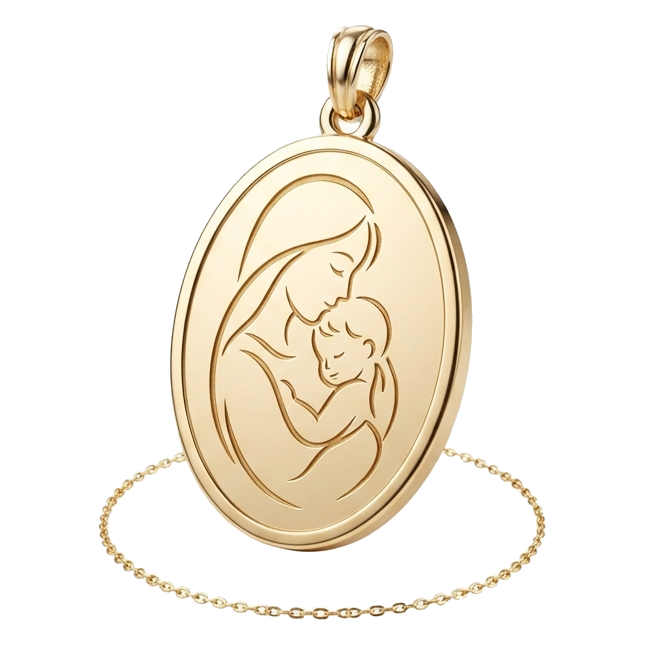
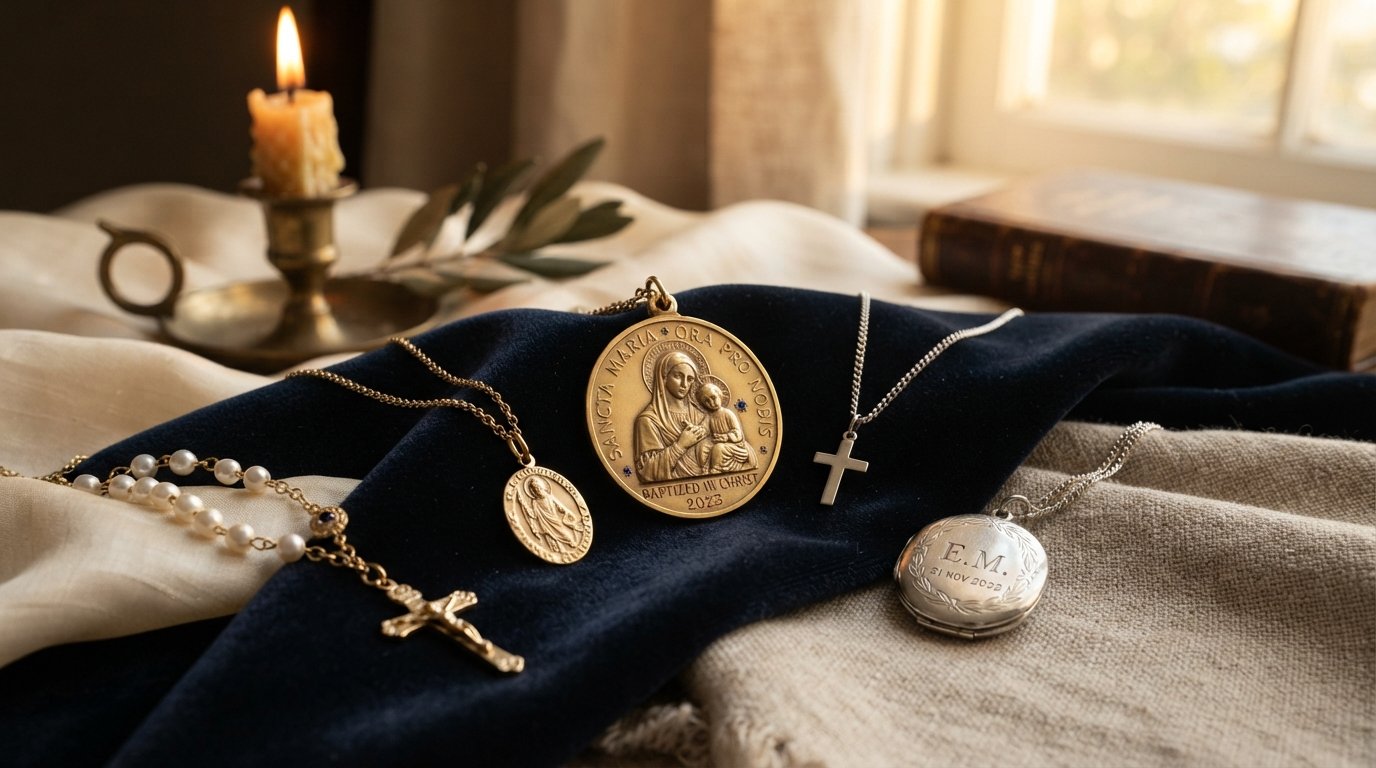
9 Carat Yellow Gold Christening Medal
Showing all 25 results
-

Botticelli Madonna christening medal – 18 carats
-

Botticelli Virgin Mary portrait christening medal – 9 carats
-

Chi Rho symbol christening medal – 9 carats
-

Dove christening medal – 9 carats
-

Eternal Love christening medal – 9 carats
-

Hammered Chi Rho christening medal – 9 carats
-

Holy Family christening medal – 9 carats
-

Holy Mother christening medal – 9 carats
-

Ictus fish symbol christening medal – 9 carats
-

Lippi Virgin portrait christening medal – 9 carats
-

Maternal gaze christening medal – 9 carats
-

Miraculous medal – 9 carats
-

Miraculous medal for engraving – 9 carats
-

Our Lady of All Graces portrait christening medal – 9 carats
-

Our Lady of the Sacred Heart christening medal – 9 carats
-

Our Lady of Wisdom christening medal – 9 carats
-

Portrait of Our Lady of Wisdom – 9 carats
-

Protective Mother christening medal – 9 carats
-

Radiant Virgin and Child christening medal – 9 carats
-

Saint Joseph christening medal – 9 carats
-

Saint Joseph the Protector christening medal – 9 carats
-

Saint Joseph the Protector portrait christening medal – 9 carats
-

Sancta Maria christening medal – 9 carats
-

Sweet Mother christening medal – 9 carats
-

Tree of Life christening medal – 9 carats
The purity of a gold jewel is read on the hallmark, not on the label. For a christening medal, this purity affects three concrete things: the colour, how well it holds up over time, and the budget available for the design. 9 carat gold, or 375/1000, contains 9 grams of pure gold per 24 grams of alloy, completed with copper and silver. Its assay hallmark takes the shape of a clover, distinct from the eagle’s head hallmark reserved for 18 carat gold (750/1000).
9 carat or 18 carat gold: what’s the difference for a christening medal?
The 37.5-point gap between the two purities shows up first in the shade. An 18 carat gold medal displays a richer yellow, almost a deep gold; in 9 carat, the colour stays yellow but paler, at points close to vermeil on 925 silver. Worn on the skin, the nuance only becomes obvious when comparing the two pieces side by side.
Everyday resistance
A child wears their medal without much care: knocks against a table, rubbing from clothing, contact with bath water. The higher proportion of copper and silver in the 9 carat alloy hardens the metal. An 18 carat medal, richer in pure gold, scratches and deforms faster on a chain worn every day.
A purity designed for a first piece of jewellery
9 carat gold remains the common choice for a christening gift because it combines an accessible entry price with good mechanical durability, two criteria that matter more for a child’s jewellery than the maximum pure gold content.
Which design to choose for a 9 carat gold christening medal?
The design is chosen first according to the child’s first name or patron saint, then according to the religious sensibility of the family giving the gift.
- The Miraculous Virgin: a design born from the apparition reported by Catherine Labouré in 1830 in Paris; it is the most requested design for a first christening, across all backgrounds.
- The patron saint: Saint Christopher for protection while travelling, Saint Michael, Saint Theresa, Saint Joseph… the choice generally follows the child’s given name or that of a grandparent.
- The guardian angel: a more neutral design, suited to families who prefer a symbol of protection without an identified biblical figure.
- Christ or the chrism: a more sober design, often chosen for a medal intended to be worn into adulthood rather than during childhood.
- The dove: a design associated with the Holy Spirit, common on medals given for confirmation as much as for christening.
Choosing the diameter according to age
A medal for an infant should be chosen small, 14 or 15 mm, to stay light on a fine chain and a still-fragile neck. From 18 mm, the design gains in detail and legibility, a size the child can wear right through to adolescence without changing jewellery. Beyond 20 mm, the medal is better suited to occasional wear than everyday use.
Engraving a 9 carat christening medal: what to plan for
Engraving is done on the back of the medal, on a surface limited by the chosen diameter. On a 15 mm piece, the legible text is generally limited to a first name and a date; beyond 18 mm, a short dedication or an extra initial still fits comfortably. Two fonts dominate: script, with fine curves, suited to a quote or dedication; block lettering, with straight letters, more legible for short text such as a first name alone. The back can carry a second text, often the godfather’s or godmother’s first name, while the front keeps the christened child’s first name and date.
Before engraving, it’s best to check the text length against the medal’s actual diameter: a ten-letter first name fits poorly on 14 mm, comfortably on 18 mm, and easily on 20 mm.
Which chain to pair with a 9 carat gold medal?
For a child, a 40 to 45 cm chain keeps the jewel from hanging too low or becoming tight as the child grows. The curb chain, with soldered oval links, remains the sturdiest for everyday wear; the belcher (jaseron) chain, finer and more supple, suits a light medal worn occasionally better. A 9 carat gold chain logically pairs with a medal of the same purity: the matching alloy ensures a consistent colour and comparable wear between the two pieces.
What does 9 carat yellow gold mean for a christening medal?
9 carat means 37.5% pure gold (375 hallmark), alloyed with copper and silver for strength. That makes a 9ct yellow gold christening medal harder and more scratch-resistant than 18ct, so it survives daily wear by a child. It also keeps the price down while retaining a warm gold tone that will not fade or plate away.
Which medal diameter should I choose for a baby?
For a newborn or infant, 13 to 15 mm is the usual pick: light enough not to pull on a fine chain and proportionate on a small chest. 16 to 18 mm suits an older child or a keepsake intended to be worn into adulthood. When choosing a baptism medal size for a newborn, check the medal weight too, as thicker pieces feel heavier.
What is the difference between an engraved and a plain medal?
Plain-back medals leave room for a personal engraving, typically the first name and baptism date, done after purchase by a jeweller. Engraved or chiselled fronts carry a relief motif such as a Virgin, an angel or a cross. If you want a personalised gold christening medal with engraving, order the plain-back version and allow a few extra days.
How do I clean and care for a gold christening medal?
Soak it a few minutes in lukewarm water with mild soap, brush gently with a soft toothbrush around the relief, rinse and dry with a soft cloth. Avoid bleach, chlorinated pools and perfume, which dull the alloy. Store it flat in a pouch rather than loose in a box. Proper care for 9ct gold jewellery for children keeps the shine for decades.